
Mid-Back Misalignment: How Thoracic Spine Mechanics Affect Your Body
The thoracic spine is more than the area between your shoulder blades. It moves as a unit with the rib cage and helps coordinate rotation, breathing, posture, shoulder motion, and the transition between the neck and low back.

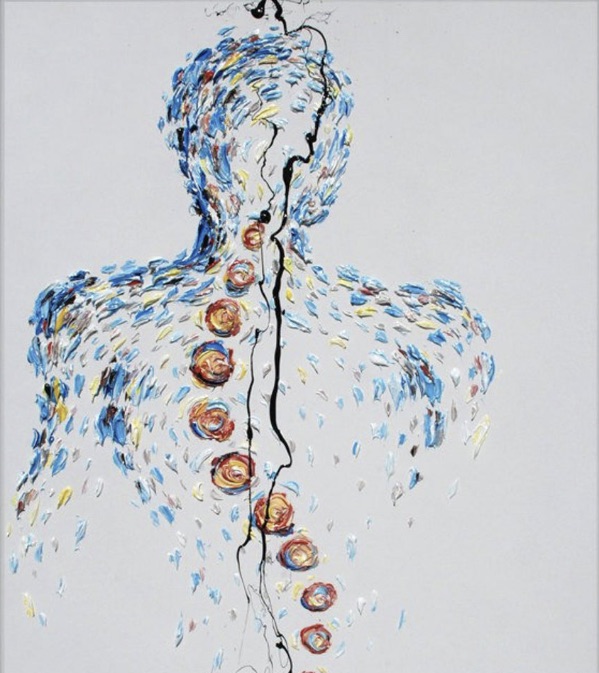
“Mid-back misalignment” is better understood as restricted or poorly coordinated thoracic and rib movement—not vertebrae interfering with specific organs.
Because the ribs attach to the thoracic spine, this region has a unique relationship with chest-wall movement, breathing mechanics, rotation, and upper-body stability.
When thoracic motion is limited, the neck, shoulders, or low back may be asked to create movement somewhere else. Assessment should determine whether that compensation actually matters for the individual.
The mid-back is one of the most overlooked regions of the spine. Unless it hurts between the shoulder blades, most people give far more attention to the neck above it or the low back below it.
Mechanically, however, the thoracic spine sits at the center of an enormous amount of movement. It connects with the rib cage, helps the trunk rotate, provides a platform for shoulder movement, contributes to breathing mechanics, and acts as a bridge between the highly mobile neck and the load-bearing lumbar spine.
When this region stops moving or coordinating well, the effects do not have to stay confined to the mid-back. Other parts of the body may simply find another way to complete the movement.
What Does “Mid-Back Misalignment” Actually Mean?
As we discussed in Part 1 of our Modern Chiropractic Care series, the word misalignment can be useful shorthand, but it should not create the impression that a vertebra has slipped dramatically out of position.
In the thoracic spine, we are usually more interested in function: whether joints are moving normally, whether the rib cage is moving with them, whether posture is repeatedly loading the same tissues, and whether one region is compensating because another is contributing too little motion.
A mid-back problem may therefore involve restricted thoracic rotation or extension, altered rib motion, muscular guarding, postural adaptation, asymmetry, or a region that has simply become less mobile after years of repetitive movement and prolonged positions.
The thoracic spine matters not because each vertebra controls a different organ, but because this entire region helps organize movement through the center of the body.
The Thoracic Spine Is Different From the Neck and Low Back
The thoracic spine contains twelve vertebrae, labeled T1 through T12. Unlike the cervical and lumbar regions, almost every thoracic vertebra connects directly with the ribs. Those ribs then wrap around the chest, with most eventually connecting toward the sternum.
That architecture changes the way the region behaves. The rib cage provides considerable stability to the thoracic spine while also participating in its motion. A systematic review of thoracic biomechanics concluded that the rib cage and thoracic spine function as a biomechanical unit rather than as two independent structures.1
This combination of mobility and stability is important. Your thoracic spine needs enough rigidity to help protect the chest and support the trunk, while still allowing you to rotate, bend, reach, breathe, and move the upper body efficiently.
It is one reason the mid-back deserves more attention than simply asking whether it hurts.
Your Ribs Move With Your Spine
Every rib attaches to the thoracic spine through joints at the back of the chest. Because of those connections, movement of the trunk and movement of the rib cage are mechanically linked.
When you rotate through the torso, the thoracic vertebrae and ribs move together. When you take a deeper breath, the rib cage has to expand and change shape, and the thoracic spine moves along with it. Research examining chest-wall and spinal motion during breathing has directly demonstrated movement of both the rib cage and thoracic spine as the chest expands and contracts.2
This does not mean a stiff mid-back causes lung disease or that a chiropractic adjustment improves lung function in otherwise healthy people. Breathing is controlled by a much larger respiratory system.
It does mean that breathing has a musculoskeletal component. Ribs, joints, muscles, the diaphragm, and the thoracic spine all have to accommodate the expansion and recoil of the chest wall.
Why Mid-Back Stiffness Can Be Noticeable With a Deep Breath
Some people with mechanical mid-back or rib discomfort notice symptoms most when they inhale deeply, cough, twist, or reach. That makes sense anatomically because those actions ask the chest wall and thoracic joints to move.
If a rib joint or thoracic segment is irritated or moving poorly, a larger breath may simply expose the restriction more clearly. Surrounding muscles can also guard the area, making the chest feel tighter even when the respiratory system itself is functioning normally.
This is one reason our mid-back pain evaluation includes rib and thoracic mechanics rather than treating every ache between the shoulder blades as a muscular knot.
There is an important distinction, however. New or unexplained chest pain, significant difficulty breathing, shortness of breath, fever, trauma, or symptoms that do not behave like a musculoskeletal problem should be medically evaluated. Not every symptom felt around the ribs or thoracic spine originates from the spine.
The Mid-Back Is Built for Rotation
Think about throwing a ball, swinging a golf club, turning to look behind you, reaching across your body, or walking briskly with natural arm swing. All of these movements involve rotation through the trunk.
The thoracic spine is an important contributor to that rotation. But the body does not stop moving simply because the mid-back has become stiff. If less rotation occurs through the thoracic region, another area may produce more of the movement instead.
For one person, that may mean additional motion through the neck. For another, it may mean rotating more through the lumbar spine or pelvis. Neither compensation is automatically harmful; compensation is one of the ways the human body remains remarkably adaptable.
The question is whether that strategy is working well. If the same region is repeatedly being asked to contribute more motion or absorb more load than it handles comfortably, stiffness or recurring symptoms may begin to appear somewhere other than the original restriction.
Why the Thoracic Spine Can Influence the Neck
The neck does not sit on an immovable platform. It sits directly on the upper thoracic spine.
If someone has difficulty extending or rotating through the upper and mid-back, the cervical spine can compensate when they look up, turn their head, work overhead, or maintain an upright visual field. Likewise, prolonged rounded positioning through the thoracic region can change the position from which the head and shoulders have to operate.
The clinical connection is supported by research showing that interventions directed at the thoracic spine can produce short-term changes in pain and disability in some people with mechanical neck pain.3 That does not establish that thoracic stiffness is the cause of every neck problem, but it reinforces the idea that neighboring spinal regions should not always be evaluated independently.
This is the same regional relationship we explored in the cervical article: where someone feels symptoms and where a movement problem originates are not always identical.
The Thoracic Spine Also Changes the Starting Position of the Shoulders
Your shoulder blades sit on the back of the rib cage. They do not attach to the spine through a conventional joint, which means their position and movement depend heavily on the muscles surrounding them and the shape and position of the thorax beneath them.
That relationship becomes especially apparent when someone reaches overhead. Research has found that shoulder range of motion can change when people move between more upright and more slouched thoracic positions.4
But posture again needs nuance. The same systematic review did not find strong evidence that greater thoracic kyphosis itself distinguishes people with shoulder pain from those without it.4
That is an important distinction for modern chiropractic care. We should not look at a rounded upper back and automatically declare it the cause of someone's shoulder pain. What matters more is whether thoracic position or mobility is actually limiting the movement that person needs.
A swimmer, golfer, weightlifter, desk worker, and eighty-year-old trying to reach a kitchen shelf may all have very different demands. The relevant question is whether their available movement matches those demands.
Posture Matters, but “Perfect Posture” Is Not the Goal
The thoracic spine naturally has a backward curve called kyphosis. That curve is normal. Sitting slightly rounded is also normal. Leaning forward, relaxing into a chair, and changing positions throughout the day are all things healthy human bodies should be able to do.
The problem with many traditional posture messages is that they treat anything other than a rigidly upright position as damage. Human movement does not work that way.
What tends to matter more is exposure. Sitting in one position for hours, repeating the same movement every day, losing access to positions you once moved through comfortably, or continually loading the same tissues can become more relevant than whether a photograph of your posture looks geometrically perfect.
At Back On Track, our goal is therefore not to force everyone into one ideal shape. We want enough mobility, control, and strength that the body has options rather than relying on the same compensation throughout the day.
What Happens Below the Thoracic Spine?
The thoracic spine ends where the lumbar spine begins, so movement through the mid-back naturally influences the strategy used by the low back and pelvis.
Imagine turning to reach into the back seat of a car. The motion can be distributed through the neck, thoracic spine, lumbar spine, pelvis, and hips. If one region contributes very little, the remaining regions have to divide the task differently.
The same concept matters during lifting, athletics, bending, and rotational movements. A golfer who cannot comfortably rotate through the thoracic region may create that motion somewhere else. Someone reaching overhead may extend through the low back when the thoracic spine and shoulders do not provide enough motion together.
Again, this does not mean thoracic stiffness automatically causes low-back pain. It means movement is shared across regions, and compensation deserves consideration when symptoms repeatedly return.
That relationship continues in Part 3 of the Modern Chiropractic Care series, where we look at how the lumbar spine works with the pelvis, hips, and lower extremities to manage load.
Mid-Back Pain Is Not Always Just a Tight Muscle
A common experience is the stubborn spot between the shoulder blades that always seems to need stretching, massage, or pressure against a foam roller. Those strategies may feel good, especially when muscles are tense, but recurring muscular tension sometimes reflects the job those muscles are being asked to perform.
A muscle may be guarding an irritated joint. It may be working harder around a stiff thoracic region. It may be supporting a repeated desk posture for hours at a time or compensating for shoulder mechanics that are not working efficiently.
That is why simply identifying a “tight muscle” does not necessarily explain why it keeps becoming tight.
Evaluation gives us the opportunity to distinguish between local tissue irritation, restricted thoracic or rib motion, postural loading, shoulder contribution, previous injury, and compensation from neighboring regions.
What About the Thoracic Spine and Internal Organs?
This is where traditional chiropractic explanations sometimes move beyond what the evidence can support.
The thoracic spinal cord and nerves are obviously part of the nervous system, and the thoracic region contains neurological pathways involved in sensation, movement, and autonomic function. But that does not mean a minor restriction at T6 causes stomach problems, T10 causes kidney dysfunction, or adjusting an individual vertebra restores a particular organ because that organ appears next to the same spinal level on a chart.
Those segment-to-organ maps oversimplify a nervous system that is far more complex.
The thoracic spine does not need those claims to be important. Its connection to the rib cage, trunk, shoulders, neck, low back, respiration, and movement already gives it an enormous mechanical role.
A modern understanding of chiropractic does not make the spine less important. It gives us better reasons for why spinal function matters.
How We Evaluate the Mid-Back at Back On Track
When we assess thoracic function, we are looking for a pattern rather than a single “bad vertebra.” That can include thoracic rotation and extension, rib motion, posture, shoulder mechanics, muscular tension, movement asymmetry, previous injuries, breathing-related symptoms, and the way the cervical and lumbar regions are participating.
Our structural and movement assessment can also help identify broader postural and movement patterns that are difficult to appreciate when someone is simply lying on a treatment table. The purpose is not to generate a perfect alignment score. It is to establish a clearer picture of how the person moves and where compensation may be occurring.
Two patients with discomfort in exactly the same spot between their shoulder blades may therefore need very different care. One may primarily need thoracic mobility restored. Another may be dealing with a shoulder problem. Another may have adequate mobility but poor muscular endurance after long hours at a desk.
The symptom tells us where to begin asking questions. It does not always tell us where the full problem ends.
Where Chiropractic Adjustments Fit
When examination identifies restricted or painful thoracic joint motion, chiropractic adjustments or other forms of manual therapy may be used to improve mobility and reduce mechanical irritation. But the research specific to thoracic spine pain is much smaller than the research surrounding neck and low-back pain, and the available evidence does not support pretending that an adjustment alone is always the answer.5
That fits our clinical approach. An adjustment is a tool for changing joint motion. Depending on the person, lasting improvement may also require mobility work, strengthening, postural changes, shoulder rehabilitation, activity modification, or addressing another region that is contributing to the pattern.
We are less interested in how many times the mid-back can be adjusted and more interested in whether movement is improving, symptoms are changing, and the body is becoming less dependent on the compensation that brought the problem to us in the first place.
The Mid-Back Is the Mechanical Bridge of the Spine
The thoracic spine is easy to overlook because it is neither as mobile as the neck nor as commonly painful as the low back. But its location makes it one of the most mechanically connected regions of the body.
It moves with the ribs when you breathe. It contributes to rotation when you walk, work, and play sports. It changes the platform from which your shoulders operate. And when it does not contribute enough motion, the neck or low back may be asked to contribute more.
That is the real health significance of the mid-back. Not an organ chart, but a region built to integrate stability with movement through the center of the body.
If your mid-back feels persistently stiff, painful, restricted, or like the same tension keeps returning between your shoulder blades, learn more about our approach to Chiropractic Care and how we evaluate the thoracic spine as part of the larger movement system.
1. Liebsch C, Wilke HJ. How Does the Rib Cage Affect the Biomechanical Properties of the Thoracic Spine? A Systematic Literature Review. Frontiers in Bioengineering and Biotechnology. 2022.
2. Leong JC, Lu WW, Luk KD, Karlberg EM. Kinematics of the Chest Cage and Spine During Breathing in Healthy Individuals and in Patients With Adolescent Idiopathic Scoliosis. Spine. 1999.
3. Tsegay GS, Gebregergs GB, Weleslassie GG, Hailemariam TTH. Effectiveness of Thoracic Spine Manipulation on the Management of Neck Pain: A Systematic Review and Meta-Analysis of Randomized Control Trials. Journal of Pain Research. 2023.
4. Barrett E, O'Keeffe M, O'Sullivan K, Lewis J, McCreesh K. Is Thoracic Spine Posture Associated With Shoulder Pain, Range of Motion and Function? A Systematic Review. Manual Therapy. 2016.
5. Southerst D, Marchand AA, Côté P, et al. The Effectiveness of Noninvasive Interventions for Musculoskeletal Thoracic Spine and Chest Wall Pain: A Systematic Review by the Ontario Protocol for Traffic Injury Management (OPTIMa) Collaboration. Journal of Manipulative and Physiological Therapeutics. 2015.



GETTING STARTED WITH CHIROPRACTIC
Get Back to Feeling Like Yourself
Talk through what’s bothering you, your health history, and what you want to get back to doing.
We’ll evaluate how your spine, joints, posture, and movement are functioning.
We’ll explain what we’re seeing and how it may relate to what you’re experiencing.
In most cases, your first adjustment can happen that same visit.
“My chronic back pain is now a rare occurrence.”
— Jennifer M.
“His treatments are spot on.”
— Lynda H.
“This guy knows what he’s doing.”
— Amber D.