
Adaptogens for Stress: What Does the Research Show?
Adaptogens are often marketed as herbs that “balance cortisol,” calm the nervous system, and help the body handle stress. Some have promising human research, but the evidence is not equal across herbs, products, or outcomes. Understanding what adaptogens may realistically help with — and what persistent stress symptoms may be telling you — makes them much more useful than simply adding another “stress support” supplement.

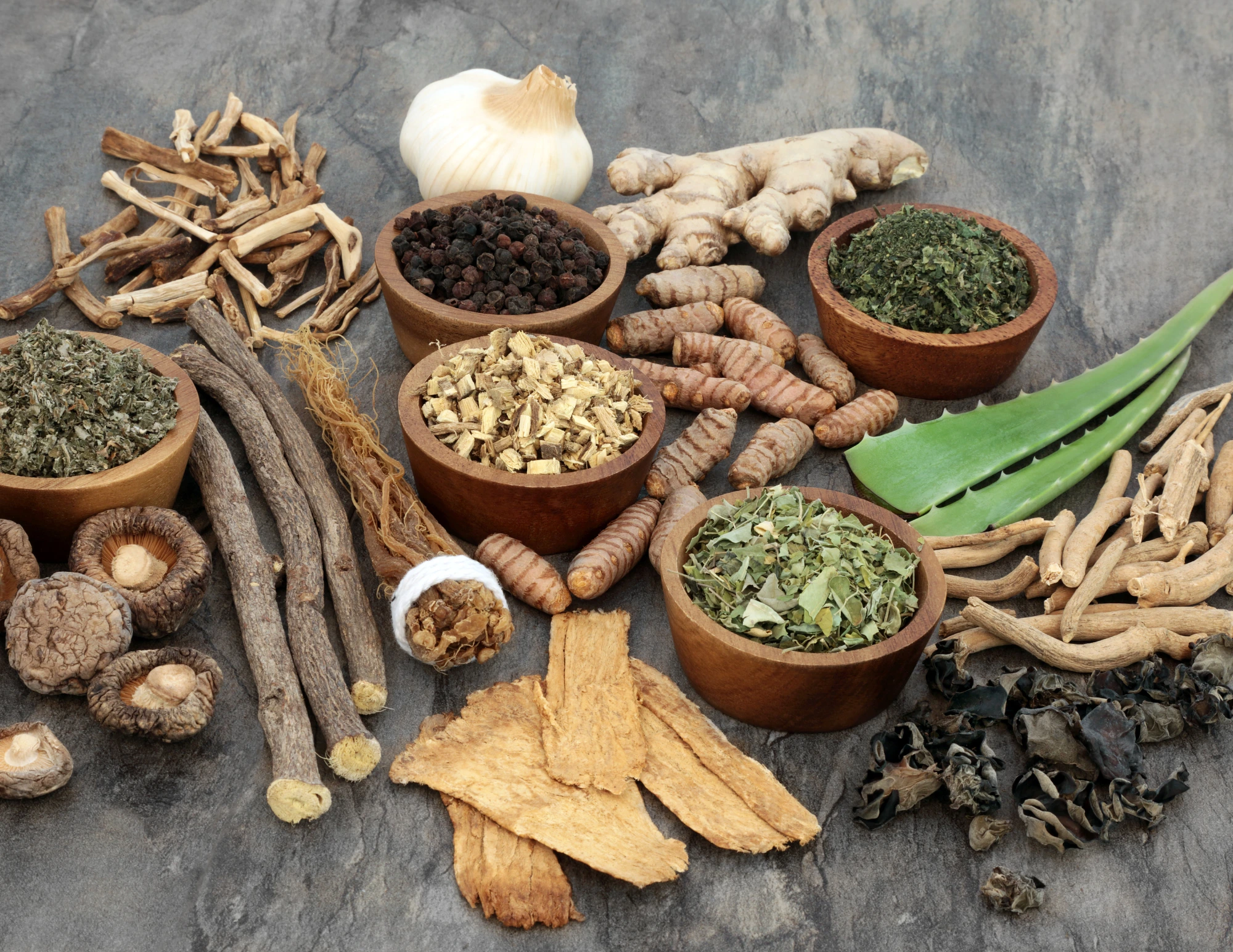
“Adaptogen” describes a traditional and research concept, not a guarantee that every herb carrying the label has the same effects. Ashwagandha, rhodiola, holy basil, Schisandra, and other adaptogens have different evidence, preparations, uses, and safety considerations.
Ashwagandha currently has some of the stronger human evidence for stress-related outcomes, but even meta-analyses do not completely agree. Lower cortisol also does not automatically mean someone will feel less stressed.
Adaptogens can be useful tools, but they should not be used to supplement around chronic sleep loss, inadequate recovery, under-fueling, excessive caffeine, thyroid or metabolic problems, medication effects, or a life that continuously exceeds the body's capacity to recover.
Ashwagandha for cortisol. Rhodiola for burnout. Holy basil for calm. Schisandra for resilience.
Adaptogens have become one of the most popular categories in the supplement world, and the basic promise is appealing: take something that helps your body become more capable of handling stress.
There is legitimate science behind parts of that idea. There is also a much larger marketing story that often turns a complicated group of herbs into one universal solution for stress, fatigue, poor sleep, brain fog, hormone imbalance, and “nervous system dysregulation.”
Those are not all the same problem, and adaptogens are not all the same intervention.
“Adaptogen” describes a concept. It does not guarantee what a particular herb will do for a particular person.
That distinction lets us take these herbs seriously without asking them to do more than the evidence supports.
What Does “Adaptogen” Actually Mean?
The modern adaptogen concept emerged during the twentieth century as researchers attempted to describe substances that appeared to increase an organism's ability to adapt to different physical, chemical, or biological stressors. Later definitions emphasized three ideas: relatively low toxicity, a nonspecific increase in resistance to stress, and a tendency toward normalization of physiological function.1
That history explains why words such as balance, resilience, and normalization remain so closely tied to adaptogens today.
But those words can become misleading when they are treated like measured clinical outcomes.
If a supplement “balances your stress response,” what actually changed? Did you sleep better? Did fatigue improve? Did perceived stress decline? Did cortisol change? Did concentration improve? Were you able to exercise without feeling depleted?
Those are separate questions.
An herb can show an effect on one outcome without proving that it universally “balances the nervous system.”
Your Stress Response Is Not Something You Want to Eliminate
Stress physiology is not inherently dysfunctional. Your brain, autonomic nervous system, adrenal glands, cardiovascular system, metabolism, and immune system coordinate to help you respond when greater demand is placed on the body.
Cortisol is part of that response. It helps regulate energy availability, blood pressure, immune activity, metabolism, and the sleep-wake cycle. The problem is not simply that cortisol exists or rises during stress.
Problems become more likely when stress responses are repeatedly activated without enough recovery, or when chronic stress begins interacting with sleep disruption, metabolic instability, illness, pain, psychological load, nutrition, and other physiological pressures.
We go much deeper into that biology in our article on how chronic stress changes your biology.
That broader physiology also explains why our Hormone Health approach looks at cortisol as part of an interconnected endocrine system rather than treating it as an isolated “stress hormone.”
The goal is not to shut down your stress response. It is to respond when needed—and recover when the demand is over.
“Balancing Cortisol” Is More Complicated Than Supplement Marketing Suggests
One of the most common claims about adaptogens is that they “balance cortisol.” Sometimes that is presented almost like a thermostat: if cortisol is high, the herb lowers it; if cortisol is low, the same herb somehow raises it.
Human research does not justify making that universal claim.
Cortisol follows a daily rhythm and changes in response to waking, sleep, exercise, meals, illness, medications, psychological stress, and numerous other inputs. A single cortisol result does not always describe that entire pattern, and symptoms such as fatigue or brain fog do not tell us whether cortisol is high, low, or even the primary problem.
Ashwagandha research illustrates the distinction particularly well.
A 2024 systematic review and meta-analysis of nine randomized controlled trials found that ashwagandha preparations improved perceived stress and anxiety scores and reduced serum cortisol compared with placebo.2
But a 2025 meta-analysis examining cortisol and perceived stress reached a more complicated conclusion: cortisol decreased significantly, while the pooled effect on perceived stress was not statistically significant.3
That discrepancy is useful.
A biomarker can change without the person experiencing an equivalent change in how they feel. Likewise, someone may feel meaningfully better without needing cortisol driven as low as possible.
So when we evaluate adaptogens, we care about the actual outcome—not simply whether a laboratory number moved.
Ashwagandha Has Some of the Stronger Human Evidence for Stress
Ashwagandha (Withania somnifera) is probably the best-known modern adaptogen, and it has a more substantial human stress literature than many of the herbs commonly placed beside it.
Overall, the research is promising. Randomized trials and meta-analyses suggest that certain preparations may improve perceived stress, and some studies also report changes in cortisol, anxiety measures, or sleep-related outcomes.2
The important phrase is certain preparations.
Ashwagandha studies have used different extracts, different parts of the plant, different concentrations of withanolides, different study durations, and different populations. NCCIH notes that many studies have been small and that a variety of ashwagandha preparations have been tested.4
That means a favorable study does not establish that every ashwagandha powder, gummy, tincture, root extract, root-and-leaf formula, or proprietary blend will produce the same effect.
It also does not mean everyone experiencing stress needs ashwagandha.
A better interpretation is that ashwagandha has enough human evidence to be a reasonable option to consider in the right context, while product selection, individual health, medications, goals, and response still matter.
Rhodiola May Fit a Different Stress Pattern
Rhodiola rosea is commonly grouped with ashwagandha, but its research history has focused more heavily on fatigue, mental performance, physical performance, and stress-related exhaustion.
That may make it conceptually more interesting for someone whose stress pattern feels like depletion and mental fatigue than for someone primarily looking for something sedating or calming.
But the strength of the evidence needs to be kept in perspective.
A systematic review of controlled trials found some studies suggesting improvements in mental or physical fatigue, but results were inconsistent and the included trials had substantial methodological limitations or unclear risk of bias.5
That is very different from saying:
“Rhodiola fixes burnout.”
Burnout itself is also not simply an herb deficiency. Someone who feels mentally depleted may be dealing with prolonged workload, inadequate sleep, depression, iron deficiency, thyroid dysfunction, under-eating, medication effects, metabolic issues, or several of those at once.
Rhodiola may be one tool worth considering.
Understanding why the fatigue exists still comes first.
Holy Basil Is Promising, but the Human Evidence Is Still Smaller
Holy basil, or Tulsi (Ocimum tenuiflorum), has a long history of traditional use and has received increasing attention in stress research.
In a 2022 randomized, double-blind, placebo-controlled study of 100 adults experiencing stress, a standardized holy basil extract was associated with greater improvements in perceived stress and subjective sleep measures than placebo. Researchers also reported differences in cortisol and cardiovascular responses during an experimental stress challenge.6
That is encouraging human evidence.
It is still one relatively small trial using one particular standardized extract. The study also involved commercial support related to the product, which does not invalidate the findings but belongs in how confidently we generalize them.
So we would describe holy basil as promising, not as a proven regulator of the nervous system.
Schisandra Shows Why Combination Formulas Are Harder to Interpret
Schisandra chinensis appears frequently in adaptogen blends and has a long history of traditional use. It also has extensive preclinical research examining multiple biological pathways.
What is much thinner is direct human evidence showing that Schisandra by itself meaningfully improves everyday psychological stress.
A 2026 randomized controlled trial tested both an ashwagandha formula and a multi-herb adaptogen formula containing Rhodiola, holy basil, and Schisandra in adults with elevated stress.7
The combination formula produced favorable findings, but a three-herb intervention cannot tell us how much of that effect came from Schisandra—or whether Schisandra was necessary for the effect at all.
This is why we would remove broad statements from the old article such as Schisandra “balances cortisol” or supports “liver detoxification during stress.”
Those claims leap from mechanistic and traditional rationale to clinical certainty much faster than the human evidence allows.
Not Every “Adaptogen” Belongs in the Same Bucket
One reason adaptogen lists become confusing is that wellness marketing often places herbs, mushrooms, roots, and compounds with very different research histories under one umbrella.
The result is the impression that ashwagandha, Rhodiola, holy basil, Schisandra, ginseng, medicinal mushrooms, and whatever else appears in the blend are variations of the same intervention.
They are not.
Different botanicals contain different active compounds, have different pharmacology, were used differently in traditional systems, and have different amounts of human evidence behind them.
That is why we would not choose an adaptogen simply because someone is “stressed.”
We would want to know what the dominant pattern actually looks like.
Is the primary problem anxiety and feeling unable to settle?
Is it mental exhaustion?
Is sleep deteriorating?
Is there significant brain fog?
Is energy crashing during the day?
Has exercise tolerance changed?
Is there a hormonal transition occurring at the same time?
The answer changes what deserves attention.
The Product on the Shelf May Not Be the Product in the Study
This is one of the most important limitations in supplement research.
A clinical trial might use a carefully characterized standardized extract produced under controlled conditions. A consumer then reads that study and purchases a gummy or proprietary blend that simply lists the same plant somewhere on the label.
Those are not automatically equivalent.
NCCIH specifically cautions that supplements available commercially may differ in important ways from the products tested in research.8
For botanical supplements, useful questions include:
- What species is being used?
- Which part of the plant is included?
- Is it whole herb or an extract?
- Is the extract standardized to particular constituents?
- Does the amount resemble anything studied in humans?
- Are several ingredients hidden inside a proprietary blend?
- Has the product been appropriately tested for identity and contaminants?
Even words such as “standardized,” “natural,” or “certified” do not automatically establish that a supplement matches the intervention used in a clinical trial.8
The evidence belongs to the preparation that was studied—not automatically to every product with the same herb on the label.
Natural Does Not Mean Automatically Safe
We want botanical supplements to be physiologically active. Otherwise, there would be little reason to take them.
But physiological activity works in both directions.
If an herb can influence sleep, hormones, blood pressure, glucose regulation, immune signaling, or neurological activity, then health conditions and medication interactions also matter.
Ashwagandha is a good example. NCCIH notes that short-term use may be tolerated by many people, but long-term safety is not well established. Potential adverse effects include gastrointestinal symptoms and drowsiness, and rare cases of liver injury have been reported.4
Ashwagandha is also not recommended in several situations, including pregnancy, breastfeeding, around surgery, and certain thyroid or autoimmune conditions. Potential interactions include medications for diabetes and blood pressure, thyroid hormone, sedatives, anticonvulsants, and immunosuppressive drugs.4
Those thyroid considerations are especially important because fatigue, anxiety, sleep disturbance, temperature changes, and brain fog can overlap with symptoms of thyroid dysfunction. Someone repeatedly treating those symptoms as a “cortisol problem” may be overlooking a reason to evaluate Thyroid Health more directly.
This does not make adaptogens inherently dangerous.
It means “natural” should never be interpreted as “incapable of doing harm.”
More Adaptogens Do Not Necessarily Create a Better Formula
Stress blends often contain five, eight, or ten active ingredients. That can look comprehensive on the label, but it can make the actual intervention much harder to understand.
If you begin ashwagandha, Rhodiola, holy basil, Schisandra, magnesium, L-theanine, and several other ingredients at once, then feel dramatically better—or dramatically worse—it may be difficult to know what caused the change.
Combination formulas also increase the number of possible interactions and make it harder to compare the product with published research.
There are situations where thoughtfully designed combinations may make sense. The point is not that multi-ingredient formulas are inherently bad.
The point is that complexity should have a reason.
A longer supplement label is not the same thing as a more individualized plan.
Don't Use Adaptogens to Supplement Around a Recovery Problem
This is where the adaptogen conversation becomes much more useful.
Imagine someone who sleeps five or six hours most nights. They wake exhausted and immediately use caffeine to get moving. Breakfast is skipped because mornings are rushed. Work follows them through dinner. Exercise has disappeared. Their phone comes to bed with them, and the last hour before sleep is spent answering messages or scrolling.
By the end of the week they feel simultaneously wired and exhausted.
Which adaptogen do they need?
Maybe none is the first answer.
The largest input may be inadequate recovery.
If sleep is consistently poor, our Sleep Health approach looks at why it is disrupted—including circadian rhythm, stress response, hormone patterns, metabolic function, and other contributors—rather than simply adding something sedating at night.
Supplements can influence physiology. They cannot create recovery time that does not exist.
An herb may eventually have a useful role. It should not become a strategy for making an unsustainable routine feel temporarily more tolerable.
Stress, Energy, and Blood Sugar Can Reinforce Each Other
Stress also does not occur in a metabolic vacuum.
During acute stress, making additional glucose available is adaptive. The body is preparing to meet greater demand.
But over time, chronic stress may overlap with insufficient sleep, irregular eating, inactivity, excess energy intake, insulin resistance, and other metabolic pressures. Someone may begin experiencing energy swings, cravings, afternoon crashes, weight changes, or greater reliance on caffeine.
In those cases, focusing exclusively on cortisol can miss the broader pattern.
Our Metabolic Health & Weight Loss page looks at the relationship among blood sugar regulation, cortisol, thyroid signaling, insulin, inflammation, sleep, and energy production because these systems often influence one another.
This is also why eating enough matters.
Someone who is under-fueling, skipping meals, or combining intense exercise with inadequate recovery may feel stressed, fatigued, shaky, irritable, or cognitively depleted. Adding another stimulating herb without correcting the underlying energy mismatch may simply complicate the picture.
Brain Fog Is Not Automatically a Need for a “Brain Adaptogen”
Brain fog is another symptom that quickly attracts supplement recommendations.
But “brain fog” is a description, not a diagnosis.
Poor sleep can impair cognition. Blood sugar instability can change energy and concentration. Thyroid dysfunction can affect mental clarity. Psychological stress can make sustained attention more difficult. Hormonal transitions, medication effects, nutrient deficiencies, illness, pain, and metabolic dysfunction can all contribute.
That is why persistent cognitive symptoms fit more naturally into a broader Brain Health evaluation than into a generic recommendation to take whatever adaptogen is currently being marketed for focus.
This does not mean herbs have no role in cognitive support.
It means we should first understand what the brain is being asked to compensate for.
Caffeine Can Mask the Same Problem You're Trying to Fix
For many people, the daily stress-support stack is happening on top of substantial caffeine intake.
Caffeine itself is not inherently unhealthy. It can improve alertness and performance and can fit comfortably into a healthy lifestyle.
The problem is when caffeine becomes the tool used to override chronic under-recovery.
If someone needs repeated caffeine just to function, cannot stay awake without it in the afternoon, and then has difficulty falling asleep at night, adding a stimulating adaptogen to improve “resilience” may deepen the mismatch.
Before adding another supplement, look at the entire daily rhythm:
- How much sleep are you actually getting?
- When is caffeine being consumed?
- Are you waking rested?
- Are meals consistent?
- Are energy crashes predictable?
- Are you training hard without recovering?
- Do weekends become attempts to recover from the workweek?
Sometimes the pattern becomes obvious once the entire day is visible.
When “Stress Symptoms” May Not Be Just Stress
Fatigue, poor sleep, low motivation, anxiety, irritability, brain fog, reduced exercise tolerance, and changes in appetite are all common during stressful periods.
They are also extremely nonspecific.
When those symptoms persist, become progressively worse, or seem disproportionate to the stress in your life, it is worth asking whether another contributor is present.
Depending on the individual, that may include thyroid dysfunction, anemia or iron deficiency, blood sugar dysregulation, insufficient energy intake, sleep apnea, medication effects, chronic pain, depression or anxiety disorders, illness, excessive training, or a hormonal transition.
For women in midlife, for example, changing stress tolerance, poor sleep, anxiety, and cognitive symptoms may overlap with perimenopause and menopause. Simply calling the entire pattern “high cortisol” can miss what is actually changing.
The same principle applies to men with declining energy, recovery, strength, libido, or motivation. Those symptoms may deserve a broader hormonal and metabolic evaluation rather than automatically reaching for an adaptogen.
Stress can be part of the picture without being the entire picture.
What We Would Address Before Building an Adaptogen Protocol
If someone wants better stress resilience, we would start with the inputs that create resilience in the first place.
Sleep and Circadian Rhythm
Consistent restorative sleep gives stress-response systems an opportunity to reset. If sleep is chronically fragmented or insufficient, improving that foundation may change daytime stress tolerance more than another capsule does.
Adequate Nutrition
The body needs sufficient energy, protein, essential fats, micronutrients, and a reasonably stable eating pattern. “Stress support” does not compensate for chronically under-fueling the system that is trying to adapt.
Movement and Exercise
Regular physical activity can improve mood, sleep, metabolic health, cardiovascular function, and resilience. But more exercise is not always better. Someone already training beyond their recovery capacity may need less stress, not another stressor.
Psychological Load
Some stressors cannot be solved physiologically. Caregiving, grief, trauma, financial pressure, relationship conflict, workplace problems, and overwhelming schedules are real inputs. Supplements can sometimes support the person experiencing them, but they cannot remove the circumstance itself.
Recovery Space
A body that never receives a signal that the demand has ended has very little opportunity to recover. Time outdoors, social connection, hobbies, unstructured time, relaxation practices, boundaries around work, and periods away from constant digital stimulation may all become part of the solution.
This is not less “advanced” than supplementation.
It is the physiology the supplements are supposed to support.
Where Functional Medicine Can Fit
Adaptogens make the most sense within Functional Medicine when they are used as one targeted tool inside a larger strategy.
Someone experiencing persistent fatigue, poor sleep, brain fog, reduced stress tolerance, metabolic changes, digestive symptoms, or hormone-related concerns may have several systems contributing at the same time.
A systems-based approach asks how those pieces interact rather than assigning every symptom to the adrenal glands.
For example, our Hormone Health approach evaluates stress physiology alongside thyroid, metabolic, reproductive, and other endocrine signaling when the pattern warrants it. Sleep problems can be explored through Sleep Health. Persistent cognitive symptoms may point toward Brain Health. Energy and weight changes may involve metabolic function. Symptoms that overlap with thyroid dysfunction deserve a closer look at Thyroid Health.
That does not mean every stressed person needs extensive testing.
It means persistent symptoms should be interpreted in context.
If targeted supplementation is appropriate, the questions then become more useful:
- What specific outcome are we trying to improve?
- Why are we considering this particular herb?
- What level of human evidence supports that use?
- Does the product resemble preparations that have actually been studied?
- Does anything in the person's medical history or medication list make it a poor fit?
- How will we decide whether it is helping?
That is a very different strategy from handing everyone who feels depleted the same “adrenal support” blend.
Adaptogens Can Be Useful Without Being Magic
Adaptogens occupy an interesting middle ground.
There is enough human research to take some of them seriously. There is not enough evidence to treat the category itself as proof that every adaptogen restores cortisol, regulates the nervous system, prevents burnout, improves immunity, and increases resilience.
Ashwagandha currently has some of the stronger human evidence for stress-related outcomes, although results vary by analysis and preparation. Rhodiola has interesting research around fatigue, but important limitations remain. Holy basil has encouraging early human evidence. Schisandra remains biologically interesting while direct human stress evidence is less developed.
That is not a reason to abandon botanical medicine.
It is a reason to use it more intelligently.
The best adaptogen protocol is not the one with the most herbs. It is the one that understands what problem it is actually trying to solve.
Start with the pattern. Look at sleep, nutrition, workload, movement, recovery, caffeine, medications, health conditions, and the stressors themselves. Then decide whether an adaptogen adds something useful.
If stress, fatigue, poor sleep, brain fog, metabolic changes, or hormone-related symptoms have become persistent and you are no longer sure what is driving what, Functional Medicine could be something worth looking into.
1. Panossian AG, Efferth T, Shikov AN, et al. Evolution of the Adaptogenic Concept From Traditional Use to Medical Systems: Pharmacology of Stress- and Aging-Related Diseases. Medical Research Reviews. 2021.
2. Arumugam V, Vijayakumar V, Balakrishnan A, et al. Effects of Ashwagandha (Withania somnifera) on Stress and Anxiety: A Systematic Review and Meta-Analysis. Explore. 2024.
3. Albalawi AA. Dual Impact of Ashwagandha: Significant Cortisol Reduction but No Effects on Perceived Stress—A Systematic Review and Meta-Analysis. Nutrition and Health. 2025.
4. National Center for Complementary and Integrative Health. Ashwagandha: Usefulness and Safety. National Institutes of Health. Updated 2023.
5. Ishaque S, Shamseer L, Bukutu C, Vohra S. Rhodiola rosea for Physical and Mental Fatigue: A Systematic Review. BMC Complementary and Alternative Medicine. 2012.
6. Lopresti AL, Smith SJ, Metse AP, Drummond PD. A Randomized, Double-Blind, Placebo-Controlled Trial Investigating the Effects of an Ocimum tenuiflorum (Holy Basil) Extract on Stress, Mood, and Sleep in Adults Experiencing Stress. Frontiers in Nutrition. 2022.
7. McKinney E, Stewart J, Kewalramani R, Singh S. Effects of Multi-Herb and Ashwagandha Root Formulas on Stress Modulation: A Randomized, Double-Blind, Placebo-Controlled Clinical Study. Trials. 2026.
8. National Center for Complementary and Integrative Health. Using Dietary Supplements Wisely. National Institutes of Health.



COMPLIMENTARY DISCOVERY CALL
Not Sure Where to Start?
No pressure. No commitment.
Talk through your symptoms, concerns, health history, and goals.
See how Functional Medicine looks at the bigger picture behind your health.
Find out whether our approach makes sense for what you're experiencing.
If we're a match, we'll explain the next step for moving forward.
“I have FINALLY found the answers.”
— Katie G.
“My health has drastically improved in just a few months.”
— Sophia S.
“Every single day I feel better and better.”
— Jessica N.