
Oxalates: When They Matter, Who Should Be Careful, and How to Manage Them
Oxalates are natural compounds found in many nutritious plant foods, including spinach, nuts, beans, beets, and chocolate. For most people, eating these foods is not a problem. Oxalates become much more important when someone is prone to calcium oxalate kidney stones, absorbs unusually large amounts through the gastrointestinal tract, or has a rare disorder that causes the body to overproduce oxalate. The goal is not to fear healthy foods — it is to understand when oxalate is actually relevant to your physiology.

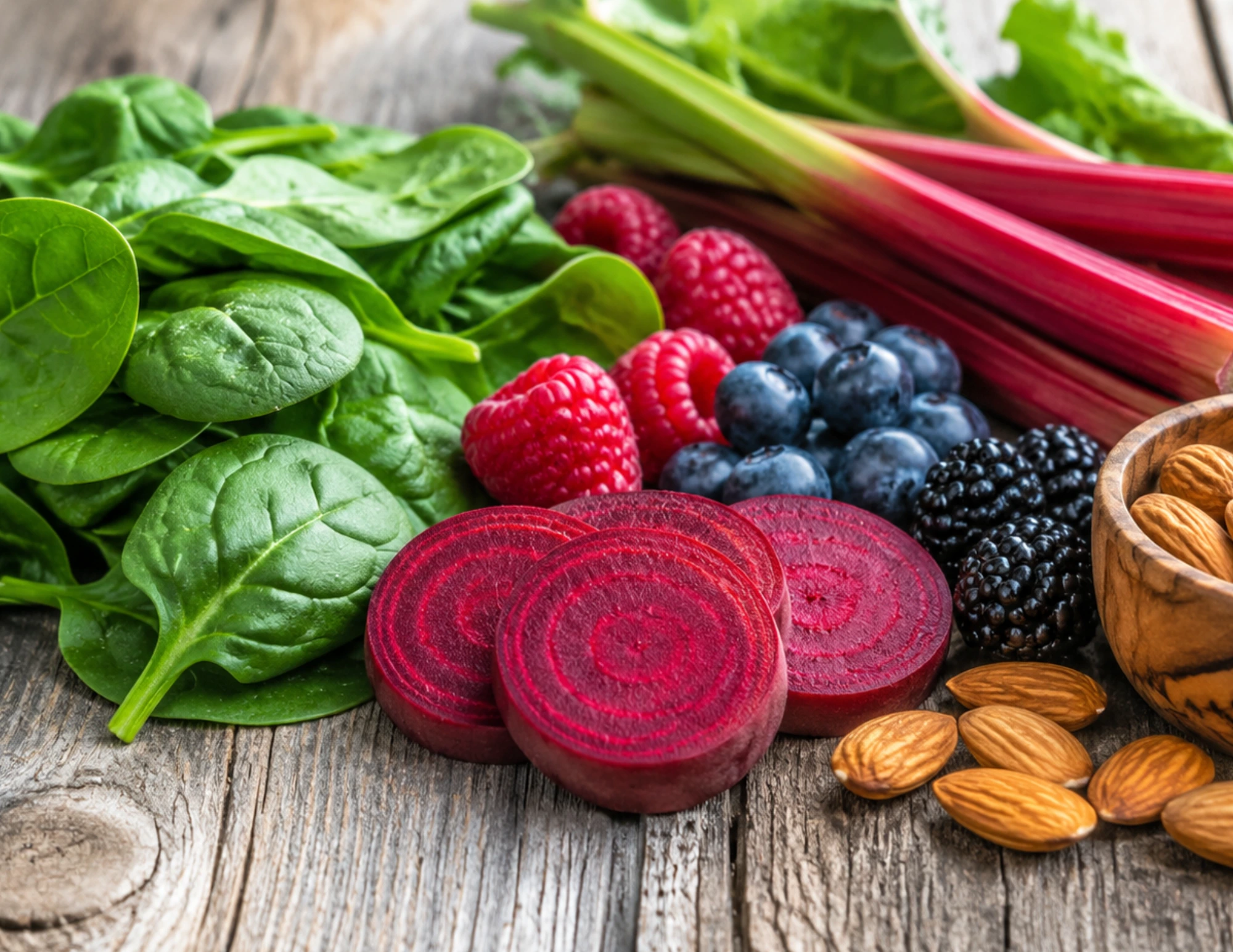
Oxalate is found naturally in many plant foods, but eating high-oxalate foods does not automatically mean you will develop kidney stones.
Oxalate becomes particularly important in people with calcium oxalate stones, hyperoxaluria, or gastrointestinal conditions that increase intestinal oxalate absorption.
If oxalate is genuinely a problem, the solution is often more nuanced than eliminating vegetables: adequate calcium with meals, hydration, attention to gut function, food preparation, and targeted reduction of the largest oxalate sources can all matter.
Spinach. Almonds. Beans. Beets. Sweet potatoes. Dark chocolate.
These foods have plenty going for them nutritionally, but they also have something else in common: they contain oxalate. That has made oxalates increasingly controversial in nutrition circles, where they are sometimes blamed for kidney stones, inflammation, joint pain, digestive symptoms, and a growing list of other health problems.
There is a legitimate reason to understand oxalates. In the right person, excessive intestinal absorption or urinary excretion of oxalate can become clinically important, particularly because oxalate readily combines with calcium and contributes to the formation of calcium oxalate kidney stones.
But that does not make oxalate inherently unhealthy.
Many of the foods containing oxalate are also rich in fiber, minerals, vitamins, healthy fats, and phytonutrients. For most people, removing those foods simply because they contain oxalate would solve a problem they never had.
The useful question is not, “Are oxalates bad?” It is, “Is this person absorbing or excreting enough oxalate for it to actually matter?”
What Are Oxalates?
Oxalate, or oxalic acid, is a small organic compound. Some comes from food, while some is produced inside the body as the end product of normal metabolic pathways.1
Unlike many nutrients, oxalate does not have a known essential function in the human body. Once it is produced or absorbed, it ultimately has to be eliminated, primarily through the kidneys.
Inside the gastrointestinal tract, oxalate can bind minerals—especially calcium—to form calcium oxalate. When that binding happens before oxalate is absorbed, much of the resulting compound can pass through the gastrointestinal tract and leave in the stool.
Oxalate that remains soluble is more available for intestinal absorption. Once absorbed, it enters circulation and eventually reaches the kidneys, where it can be excreted in the urine.
That relationship among dietary oxalate, calcium, intestinal absorption, and urinary excretion is central to understanding when oxalate becomes a problem.
Oxalates Are Primarily a Kidney-Stone Conversation
The most established clinical concern with oxalate is calcium oxalate kidney-stone formation. Calcium stones are the most common category of kidney stone, and calcium oxalate is more common than calcium phosphate within that category.2
A stone does not form simply because someone ate spinach. Stone formation reflects the chemistry of the urine, including the concentrations of oxalate and calcium, urine volume, citrate, sodium, uric acid, pH, and other factors that influence whether crystals form and grow.
Urinary oxalate is nevertheless important. As urinary oxalate rises, calcium oxalate supersaturation and stone risk can rise as well.1
This is why dietary oxalate can be highly relevant to one person with recurrent calcium oxalate stones while being relatively unimportant to another person with no stone history and normal oxalate handling.
Having a Calcium Oxalate Stone Does Not Mean You Should Stop Eating Calcium
This is one of the most counterintuitive parts of the subject.
If the stone contains calcium and oxalate, it sounds logical to reduce calcium. But calcium consumed with food can actually help by binding oxalate inside the intestine before that oxalate has an opportunity to be absorbed.
That is why current kidney-stone guidance emphasizes getting an appropriate amount of dietary calcium rather than indiscriminately restricting calcium in people prone to calcium oxalate stones.2
Timing matters as well. When calcium and oxalate are present in the gastrointestinal tract together, they have an opportunity to bind before absorption occurs. Modern urolithiasis guidance specifically recommends calcium with meals in enteric hyperoxaluria for this reason.8
If oxalate is the problem, removing calcium can sometimes move the chemistry in exactly the wrong direction.
Who Actually Needs to Pay More Attention to Oxalates?
There is no reason for everyone to follow a low-oxalate diet. The people for whom oxalate deserves the most attention generally fall into a few different groups.
People With Calcium Oxalate Kidney Stones or Hyperoxaluria
If someone has formed calcium oxalate stones—particularly repeatedly—the amount of oxalate reaching the urine becomes clinically relevant. That does not automatically mean diet is the only reason the stones are forming, but it gives us a reason to investigate oxalate along with the rest of the person's urine chemistry.
The National Institute of Diabetes and Digestive and Kidney Diseases specifically identifies foods such as spinach, rhubarb, nuts and nut products, peanuts, and wheat bran as foods that may need to be reduced in people whose calcium oxalate stone pattern warrants dietary oxalate restriction.2
People With Fat Malabsorption or Certain Gastrointestinal Conditions
This is where the gut connection becomes especially important.
Under normal circumstances, calcium inside the intestinal tract can bind some dietary oxalate. But when someone has significant fat malabsorption, unabsorbed fatty acids also bind calcium. That leaves less calcium available to bind oxalate, allowing a larger proportion of oxalate to remain soluble and available for absorption.3
This process is called enteric hyperoxaluria.
It can occur in conditions or circumstances that impair fat absorption, including:
- Crohn's disease and other forms of inflammatory bowel disease in selected patients
- Significant small-bowel disease or resection
- Short bowel syndrome
- Pancreatic insufficiency
- Certain malabsorptive bariatric surgeries, particularly Roux-en-Y gastric bypass
- Other conditions producing substantial chronic fat malabsorption
Enteric hyperoxaluria is not merely theoretical. Increased intestinal oxalate absorption in these conditions can raise urinary oxalate enough to increase kidney-stone risk and, in severe cases, contribute to oxalate-related kidney injury.3
This is a good example of why simply giving someone a list of “foods to avoid” can miss the larger physiological question. If intestinal malabsorption is driving excessive oxalate absorption, the gastrointestinal disorder itself deserves attention.
Our Gut Health resources explain how we evaluate digestion, nutrient absorption, intestinal function, and other gastrointestinal patterns in greater depth.
People With Primary Hyperoxaluria
Primary hyperoxaluria is a completely different situation. It refers to a group of rare inherited metabolic disorders in which the body produces excessive oxalate internally.
That means the core problem is not simply that someone is eating too much spinach.
In primary hyperoxaluria type 1, for example, a genetic enzyme defect causes excessive production of oxalate within the liver. That oxalate must then be eliminated through the kidneys and can produce recurrent stones, nephrocalcinosis, kidney damage, and—in advanced disease—systemic oxalate accumulation.4
This distinction corrects an important misconception from the previous version of this article. Primary hyperoxaluria does not generally mean someone should rely on an extremely restrictive low-oxalate diet. Because much of the oxalate is being produced internally, current guidance for primary hyperoxaluria type 1 notes that strict dietary oxalate restriction provides relatively little benefit, although avoiding unusually large amounts of very high-oxalate foods can still be reasonable.4
Primary hyperoxaluria requires specialist medical management and should not be treated as an ordinary nutritional intolerance.
Do Oxalates Cause Joint Pain, Fibromyalgia, or “Systemic Inflammation”?
This is where conversations about oxalate often move much farther than the clinical evidence.
There are situations in which oxalate crystals can accumulate outside the urinary tract. In severe hyperoxaluria—particularly when kidney function declines enough that oxalate can no longer be adequately eliminated—systemic oxalosis can involve bone, joints, skin, blood vessels, the eyes, and other tissues.
That is a serious metabolic complication. It is not the same thing as saying that ordinary dietary oxalate commonly causes unexplained joint pain, fibromyalgia, or generalized inflammation in otherwise healthy people.
At present, there is not strong clinical evidence supporting a low-oxalate diet as a general treatment for arthritis, fibromyalgia, or nonspecific inflammatory symptoms.
That does not mean an individual can never notice a reproducible response to a food containing oxalate. It means that response should start an investigation rather than prove the mechanism. Spinach, almonds, chocolate, and other high-oxalate foods contain many compounds besides oxalate, and symptoms such as fatigue, pain, bloating, and brain fog have many possible explanations.
Which Foods Contain the Most Oxalate?
Food oxalate tables are surprisingly inconsistent. Oxalate content can vary with plant variety, growing conditions, maturity, preparation, serving size, and laboratory method, so an exact number assigned to every food can create a false sense of precision.
Instead of memorizing hundreds of values, it is more useful to recognize foods that can contribute a relatively large amount of dietary oxalate when eaten frequently or in large portions.
Common examples include:
- Spinach
- Rhubarb
- Beet greens
- Beets
- Some nuts, particularly almonds
- Cocoa and dark chocolate
- Wheat bran
- Some soy foods
- Some beans and legumes
- Sweet potatoes
- Black tea
That does not make these foods unhealthy. Spinach still contains folate, carotenoids, vitamin K, and other nutrients. Almonds still provide healthy fats, protein, fiber, and minerals. Beans remain valuable sources of fiber and plant protein.
The clinical question is whether the person's total oxalate exposure needs to be reduced—not whether a nutritious food should permanently be placed on a “bad food” list.
A Giant Spinach Smoothie Is Different From a Few Leaves in a Salad
It is sometimes said that blending food “concentrates” oxalate. Technically, putting spinach into a blender does not create additional oxalate. One cup of spinach still contains the oxalate that was present in that cup before it was blended.
The practical problem is portion size.
A large smoothie may allow someone to consume several handfuls of raw spinach in a few minutes. Juicing can similarly make it easier to consume large quantities of selected ingredients that might otherwise be difficult to eat in one sitting.
For someone with documented hyperoxaluria or recurrent calcium oxalate stones, that concentrated serving pattern can matter even though the blender itself is not changing the chemistry of the oxalate.
Cooking Can Lower Oxalate in Some Foods
Preparation can make a meaningful difference, particularly with vegetables containing a large soluble-oxalate fraction.
In a study examining nine vegetables, boiling reduced soluble oxalate by approximately 30% to 87%, depending on the food. Steaming produced smaller and more variable reductions, while the oxalate lost during boiling was largely recovered in the cooking water.5
That tells us why the method matters: soluble oxalate can leach into the water.
If someone genuinely needs to lower oxalate intake, boiling a high-oxalate vegetable and discarding the cooking water may therefore reduce the dose more effectively than eating the same vegetable raw.
We would not extend that finding into the claim that soaking every nut, grain, or seed overnight reliably removes a predictable amount of oxalate. Effects vary too much by food and preparation method to treat soaking as a universal solution.
Do You Need to Give Up Spinach, Almonds, and Sweet Potatoes?
Usually, no.
Even in people who need to reduce urinary oxalate, the goal does not necessarily have to be eliminating every food that appears on an oxalate list.
A more targeted strategy may include reducing the largest and most frequent oxalate exposures, modifying portion size, preparing certain foods differently, getting adequate calcium with meals, improving hydration, and understanding why oxalate absorption or excretion is elevated in the first place.
This preserves far more dietary variety than constructing an increasingly restrictive list of plants someone is afraid to eat.
Calcium With Meals Can Be More Useful Than Simply Cutting Foods
If oxalate is present in a meal, adequate calcium in that same digestive window can reduce the fraction of oxalate available for absorption.
This is why the advice to avoid calcium because someone has “calcium stones” can backfire. Current kidney-stone guidance recommends adequate dietary calcium, and European guidance specifically recommends calcium with meals in enteric hyperoxaluria to bind intestinal oxalate.28
The appropriate calcium intake depends on the person, their diet, health history, kidney function, and whether supplements are being considered. The point is not that everyone should add a large calcium supplement to a high-oxalate meal.
It is that low calcium is not automatically safer when oxalate absorption is the concern.
Hydration Matters Because Concentration Matters
Kidney-stone formation is influenced not only by how much mineral reaches the urine but also by how concentrated that urine becomes.
Drinking enough fluid increases urine volume and dilutes stone-forming substances. For this reason, adequate fluid intake is one of the most consistent recommendations for reducing recurrent kidney-stone risk.2
This is particularly important during hot weather, exercise, travel, illness, diarrhea, or other circumstances that increase fluid losses.
The appropriate amount is individualized, especially for anyone with kidney, heart, or other conditions that affect fluid recommendations.
Vitamin C Can Become Oxalate
Not all oxalate originates in food.
Vitamin C, or ascorbic acid, can be metabolized into oxalate. That becomes relevant when people use very large supplemental doses, particularly if they already have hyperoxaluria, kidney disease, malabsorption, or a history of calcium oxalate stones.
A 2026 systematic review and meta-analysis found that vitamin C supplementation significantly increased 24-hour urinary oxalate compared both with baseline and placebo.7
This is not an argument against eating oranges, berries, peppers, or other foods naturally containing vitamin C.
It is a reason to distinguish nutrient intake from food from repeated high-dose supplementation. Someone taking grams of supplemental vitamin C per day is creating a very different exposure than someone eating vitamin-C-rich produce.
What Does the Gut Microbiome Have to Do With Oxalate?
The microbiome is another interesting part of oxalate physiology.
Certain intestinal bacteria can metabolize oxalate. Oxalobacter formigenes has received the most attention because oxalate is central to its metabolism, but other microbial communities may contribute to intestinal oxalate handling as well.6
Studies have found differences in gut microbial patterns between some kidney-stone formers and people without stones, and researchers are investigating whether manipulating oxalate-degrading microbial communities could eventually reduce stone risk.
The clinically important word is eventually.
Current evidence is not strong enough to say that a commercial probiotic can reliably recolonize the intestine with the right organisms, lower urinary oxalate, and prevent recurrent calcium oxalate stones in everyone. A 2024 review of the gut microbiome in kidney-stone disease concluded that microbiome findings are promising but not yet ready to support specific microbiome-treatment recommendations.6
So the gut microbiome belongs in the oxalate conversation, but it should not be turned into another simple formula of “dysbiosis causes oxalate problems, therefore take a probiotic.”
How Do You Know Whether Oxalate Is Actually a Problem?
This is where testing should answer a specific question.
If someone has recurrent kidney stones, knowing the composition of the stone is useful whenever possible. A calcium oxalate stone creates a different nutritional conversation from a uric-acid, calcium-phosphate, struvite, or cystine stone.
For people who warrant metabolic evaluation, 24-hour urine testing can provide much more information than simply measuring oxalate in isolation. Current urolithiasis guidance includes urine volume, pH, calcium, oxalate, uric acid, citrate, sodium, and magnesium among the relevant urinary measurements used when evaluating calcium oxalate stone risk.8
That broader pattern matters because a person may have only mildly elevated oxalate but very low urine volume, high urinary calcium, low citrate, or another factor strongly influencing crystallization.
If urinary oxalate is significantly elevated, the next question becomes why. Is dietary intake unusually high? Is calcium intake very low? Is there fat malabsorption? Has the person had bariatric or intestinal surgery? Are very high doses of vitamin C being used? Does the degree of hyperoxaluria raise concern for a rare primary disorder?
That is a much more useful investigation than testing oxalate simply to explain vague fatigue, joint pain, or inflammation.
When Does a Low-Oxalate Diet Actually Make Sense?
A lower-oxalate diet can be useful when there is a reason to believe reducing intestinal oxalate will meaningfully change urinary oxalate or stone risk.
That can include someone with elevated urinary oxalate and recurrent calcium oxalate stones or someone with enteric hyperoxaluria due to malabsorption. Current European urolithiasis guidance specifically states that oxalate restriction is beneficial when hyperoxaluria is present and recommends a lower-fat, lower-oxalate diet along with calcium at meals in enteric hyperoxaluria.8
That is very different from putting someone on a severely restricted diet because they have fatigue, arthritis, or an internet symptom checklist that happens to mention oxalate.
A useful therapeutic diet needs a clear target and some way of determining whether it worked.
A Better Way to Lower Oxalate Without Wrecking the Diet
When oxalate reduction is appropriate, we would rather preserve dietary quality than eliminate dozens of nutritious foods unnecessarily.
Depending on the clinical situation, a more practical strategy may involve:
- Identifying the largest sources of oxalate rather than trying to remove every trace
- Reducing very large portions of foods such as spinach when they are eaten frequently
- Using lower-oxalate greens such as kale in some meals instead of always relying on spinach
- Boiling selected high-oxalate vegetables and discarding the cooking water
- Eating an appropriate amount of calcium with meals rather than unnecessarily restricting it
- Maintaining adequate fluid intake
- Reviewing high-dose vitamin C supplementation
- Addressing fat malabsorption or gastrointestinal disease when enteric hyperoxaluria is suspected
- Using urine testing to determine whether the strategy is actually changing the relevant chemistry
The exact plan depends on why oxalate is elevated. Someone with enteric hyperoxaluria after intestinal surgery requires a different approach from someone whose primary issue is a daily smoothie containing several cups of raw spinach.
The Functional Medicine Question Is “Why Is Oxalate High?”
Oxalates are a good example of where Functional Medicine can be useful without turning a normal food compound into a universal explanation for chronic symptoms.
If a patient's urinary oxalate is elevated, we can ask what is creating that pattern:
- Is dietary oxalate unusually high?
- Is dietary calcium too low or poorly timed?
- Is the patient consuming large amounts of raw spinach, nuts, cocoa, or other concentrated sources every day?
- Is high-dose supplemental vitamin C contributing?
- Is there evidence of fat malabsorption?
- Is inflammatory bowel disease, pancreatic insufficiency, bariatric surgery, or another gastrointestinal condition changing absorption?
- Are chronic diarrhea and dehydration increasing stone risk?
- What does the rest of the 24-hour urine chemistry show?
- Is the degree of hyperoxaluria unusual enough to warrant evaluation for a primary metabolic disorder?
That moves us away from labeling oxalate itself as the enemy and toward understanding why this person's oxalate physiology has become different.
When Oxalate Is Not the Answer
It is just as important to recognize when the evidence is pointing somewhere else.
If a person has never had a kidney stone, has no evidence of hyperoxaluria or kidney disease, has no meaningful malabsorption history, and is considering removing spinach, nuts, beans, sweet potatoes, and other nutritious foods solely because they are tired or achy, oxalate may not be the most productive place to start.
Highly restrictive diets can create their own problems. Reducing plant variety can lower fiber intake, change microbiome substrates, make nutrient adequacy harder, and turn eating into an increasingly complicated process.
Functional Medicine should broaden the investigation when necessary—not automatically make the diet narrower.
Final Thoughts
Oxalates are real, and for the right patient they can be extremely important. Excess urinary oxalate contributes to calcium oxalate stone formation, fat-malabsorption disorders can dramatically increase intestinal oxalate absorption, and rare genetic disorders can cause the body to produce excessive oxalate on its own.
But none of that means every person needs to fear high-oxalate foods.
For most people, foods such as leafy greens, nuts, beans, and other plant foods can remain valuable parts of a nutrient-dense diet. When oxalate does become a problem, the solution may involve much more than simply removing foods: calcium intake and timing, hydration, gastrointestinal absorption, cooking methods, supplements, medications, and the rest of the urinary chemistry all deserve consideration.
Oxalate restriction makes the most sense when we can explain why oxalate matters for that individual—and what we expect to improve by changing it.
If recurrent kidney stones, digestive problems, malabsorption, unusual nutrient patterns, or other findings suggest oxalate may be part of a larger physiological problem, a personalized Functional Medicine evaluation can help determine what deserves investigation and whether dietary restriction is actually necessary.
1. Mitchell T, Kumar P, Reddy T, et al. Dietary Oxalate and Kidney Stone Formation. American Journal of Physiology-Renal Physiology. 2019.
2. National Institute of Diabetes and Digestive and Kidney Diseases. Eating, Diet, & Nutrition for Kidney Stones.
3. Witting C, Langman CB, Assimos D, et al. Pathophysiology and Treatment of Enteric Hyperoxaluria. Clinical Journal of the American Society of Nephrology. 2021.
4. Milliner DS, Harris PC, Sas DJ, et al. Primary Hyperoxaluria Type 1. GeneReviews. Updated December 2025.
5. Chai W, Liebman M. Effect of Different Cooking Methods on Vegetable Oxalate Content. Journal of Agricultural and Food Chemistry. 2005.
6. The Role of the Gut Microbiome in Kidney Stone Disease. Urologic Clinics of North America. 2024.
7. The Effect of Vitamin C Supplements on Urinary Stone Risk: A Systematic Review and Meta-Analysis. 2026.
8. European Association of Urology. EAU Guidelines on Urolithiasis: Metabolic Evaluation and Recurrence Prevention. 2026.
Related Articles


COMPLIMENTARY DISCOVERY CALL
Not Sure Where to Start?
No pressure. No commitment.
Talk through your symptoms, concerns, health history, and goals.
See how Functional Medicine looks at the bigger picture behind your health.
Find out whether our approach makes sense for what you're experiencing.
If we're a match, we'll explain the next step for moving forward.
“I have FINALLY found the answers.”
— Katie G.
“My health has drastically improved in just a few months.”
— Sophia S.
“Every single day I feel better and better.”
— Jessica N.