
Why Do Allergies Happen? A Functional Medicine Look at Immune Reactivity
Allergies are often treated as a simple trigger-and-symptom problem: pollen causes sneezing, a food causes a reaction, and histamine creates the symptoms. But the more interesting question is why the immune system became sensitized to something that is harmless to most people in the first place. Genetics matter, but so do immune tolerance, barrier health, environmental exposures, and the microbial ecosystems that help shape immune function.


An allergy develops when the immune system becomes sensitized to a normally harmless substance and reacts to it as though it were a threat.
Histamine creates many familiar allergy symptoms, but allergic disease involves a larger network of immune cells, barrier tissues, genetics, environment, and immune tolerance.
A Functional Medicine approach does not replace appropriate allergy treatment. It asks what may be influencing the intensity and persistence of the immune response in the individual.
For one person, spring means warmer weather and more time outside. For someone else, the same afternoon can mean sneezing, congestion, itchy eyes, sinus pressure, and the feeling that their immune system has declared war on the entire neighborhood.
The pollen itself is not dangerous. Neither is pet dander, a dust mite, or most of the other substances that commonly trigger allergies.
The problem is the response.
An allergy develops when the immune system identifies something that is normally harmless as a potential threat and becomes sensitized to it. Once that pattern has been established, future exposure can trigger a rapid immune response that produces the symptoms we recognize as an allergic reaction.
That explains what happens during an allergy attack. But it leaves another important question unanswered:
Why does one person's immune system tolerate an exposure while another person's reacts intensely to it?
That question is where the conversation becomes much more interesting—and much more consistent with a Functional Medicine view of immune health.
What Actually Happens During an Allergic Reaction?
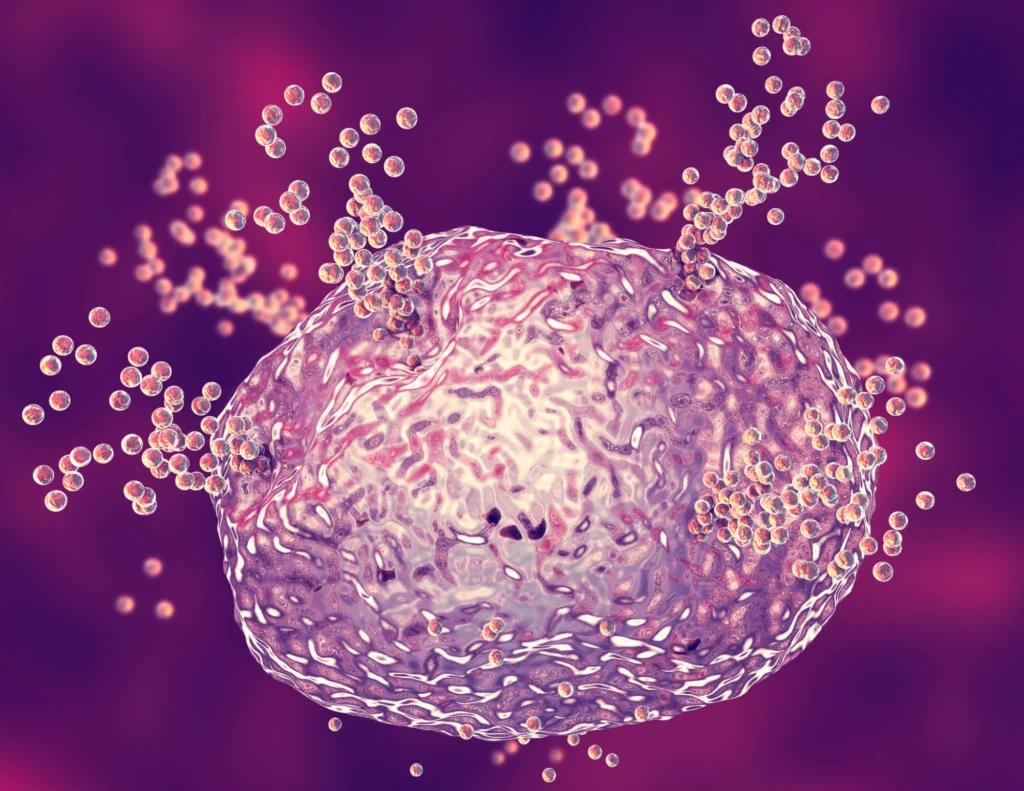
Many of the most familiar allergic reactions involve an antibody called immunoglobulin E, or IgE. During the process of sensitization, the immune system develops IgE antibodies that recognize a particular allergen. Those antibodies can bind to immune cells called mast cells and basophils, essentially preparing those cells to recognize the same allergen if it appears again.1
On a future exposure, the allergen can bind to that allergen-specific IgE and activate those immune cells. Mast cells then release histamine along with other inflammatory mediators such as leukotrienes, prostaglandins, cytokines, and enzymes.1
Where that reaction occurs helps determine what you experience. In the nose and upper airway, it may mean sneezing, congestion, itching, and increased mucus. In the skin, it may contribute to itching, redness, swelling, or hives. Food allergy can involve the gastrointestinal tract, skin, respiratory system, cardiovascular system, or several of those systems at once.
This is one reason allergies can look so different from person to person even though some of the underlying immune mechanisms are similar.
Sensitization Comes Before the Reaction
One of the most useful concepts in understanding allergies is that the first noticeable reaction is not necessarily the beginning of the process.
Before an IgE-mediated allergy can occur, the immune system first has to become sensitized to the allergen. During sensitization, immune cells encounter a substance, process information about it, and eventually develop an allergen-specific immune response. The next time the immune system encounters that substance, it is prepared to react much more quickly.
This ability to remember previous exposures is part of the adaptive immune system. It is extremely useful when the target is an actual pathogen. The same ability becomes problematic when immune memory develops against something harmless.
Our article on innate vs. adaptive immunity goes deeper into how those two branches of the immune system communicate and how immune memory develops.
The bigger concept is immune tolerance. A healthy immune system does not simply need to recognize threats. It also needs to recognize what does not require an aggressive response.
Histamine Is Important—but It Is Not the Whole Story
Histamine gets most of the attention because blocking histamine can provide noticeable relief from sneezing, itching, watery eyes, and other classic allergy symptoms.
But histamine is not simply a harmful chemical that the body needs to eliminate. It is an important signaling molecule involved in immune defense, blood vessel function, stomach-acid secretion, and nervous-system communication.
During an allergic reaction, the problem is not that histamine exists. It is that mast cells release large amounts of histamine and other mediators in response to an allergen the immune system has become sensitized to.
That distinction becomes especially important because an IgE-mediated allergy and difficulty tolerating histamine are not necessarily the same problem. Someone can have seasonal allergies with completely normal histamine metabolism, while another person may experience symptoms associated with a greater overall histamine burden for different reasons.
We explore that distinction in much greater depth in our article on histamine intolerance and high histamine levels.
Why Does One Person Develop Allergies While Another Doesn't?
There is no single "root cause" that explains every allergic condition.
Genetic susceptibility clearly matters, but genetics alone cannot explain the entire picture. Modern allergy research increasingly describes allergic disease as the result of interactions between genes, immune tolerance, epithelial barriers, microorganisms, environmental exposures, diet, and other influences that shape the immune system over time.2
This systems perspective is important because the immune system does not operate in isolation. It is constantly interacting with the surfaces that separate us from the outside world—the skin, respiratory tract, and gastrointestinal tract—and with the trillions of microorganisms that inhabit many of those surfaces.
Two people can therefore encounter the same pollen while having very different genetic susceptibility, airway health, environmental exposures, microbial ecosystems, and histories of immune sensitization.
The pollen may be the trigger.
It is not necessarily the entire explanation for why the response is so different.
Your Barrier Tissues Are Part of the Immune System's First Conversation With the Environment
The skin, respiratory tract, and gastrointestinal tract are not passive walls. They are active biological barriers containing immune cells, signaling molecules, mucus, microorganisms, and specialized epithelial cells that constantly interact with the outside environment.
Research into what is known as the epithelial barrier hypothesis has highlighted the relationship between barrier dysfunction and allergic disease. Disturbances in these barriers may influence how allergens, pollutants, microorganisms, and immune cells interact and may contribute to allergic sensitization and ongoing type 2 inflammation in susceptible individuals.3
This does not mean everyone with seasonal allergies has "leaky gut," nor does it mean repairing the intestinal barrier automatically eliminates pollen allergy.
It does mean barrier biology matters.
And those barriers extend beyond the gut. Allergic rhinitis involves the airway epithelium. Atopic dermatitis involves the skin barrier. Food allergy involves complex interactions between exposure, sensitization, oral tolerance, and the gastrointestinal immune system.
We have a separate article explaining what leaky gut is and how intestinal permeability works for readers who want to go deeper into the gastrointestinal side of barrier health.
The Gut and the Immune System Are Closely Connected
The gastrointestinal tract faces a difficult immune challenge every day. It is constantly exposed to food proteins, microorganisms, bacterial products, and other foreign material. The immune system has to defend against pathogens while tolerating food and the enormous community of beneficial and neutral microorganisms that normally live there.
That balance between defense and tolerance is one reason the gut microbiome has become such an active area of allergy research.
Gut bacteria and the compounds they produce can influence regulatory immune pathways, mucosal barrier function, and immune tolerance. Differences in microbial colonization—particularly early in life—have been associated with the later development of allergic conditions.4
But this is another area where the science should not be oversimplified.
We cannot currently perform a stool test, identify one missing bacterial species, and declare that we have found the cause of someone's seasonal allergies. Researchers are still working to understand what constitutes a healthy allergy-protective microbiome, how microbial changes interact with genetics and environment, and which interventions reliably improve allergic disease.
What we can say is that gut health and immune health are biologically connected. If someone with significant allergies also has chronic bloating, irregular bowel movements, food-related symptoms, or another ongoing digestive problem, there is good reason to understand both parts of the picture rather than assuming they are completely unrelated.
Our Gut Health resources explore the microbiome, intestinal barrier, digestion, and mucosal immunity in greater depth.
Your Environment Shapes the Immune System Too
Allergy is the result of an immune system interacting with an environment, which means the environment matters.
That includes the obvious allergens—pollen, mold, dust mites, animals, foods, medications, and insect venom—but researchers are also investigating how air pollution, tobacco smoke, household chemicals, changes in microbial exposure, detergents, dietary patterns, and other parts of the modern environment affect epithelial barriers and allergic susceptibility.3
This does not mean every environmental chemical is "toxic" or that people with allergies need to live in a perfectly controlled bubble.
It means total exposure matters.
Someone with seasonal allergic rhinitis may have very little control over whether trees release pollen in the spring, but they can often reduce the amount of pollen entering their immediate environment. Closing windows during high-pollen periods, changing clothing after spending time outside, washing pollen from the hair and skin, using appropriate filtration, and managing indoor air quality can all reduce exposure without changing the underlying allergy.
If pollen is your primary issue, our dedicated guide to seasonal allergies and reducing the overall allergy burden goes deeper into those practical strategies.
Allergy, Food Intolerance, and Histamine Intolerance Are Not Interchangeable
One of the biggest sources of confusion in conversations about food and immune health is the tendency to call every negative reaction an allergy.
A true food allergy is an immune-mediated reaction. Many immediate food allergies involve IgE, but non-IgE-mediated food-allergic conditions also exist.6
A food intolerance can produce very real symptoms without involving the same allergic mechanism. Lactose intolerance is a simple example: inadequate lactase can lead to gas, bloating, cramping, and diarrhea after consuming enough lactose, but that is not an IgE allergy to milk.
Histamine intolerance is another separate discussion. Someone may react to histamine-rich foods or have difficulty managing their overall histamine burden without having an IgE allergy to those foods.
Understanding which mechanism is actually involved matters because the evaluation—and the appropriate response—can be completely different.
Symptom Relief and Understanding the Bigger Picture Are Not Opposing Goals
The original version of this article treated antihistamines, nasal steroids, and other conventional allergy treatments as though they were merely suppressing the immune system while the "real problem" continued underneath.
We do not think that is the most useful way to look at allergy care.
If someone cannot breathe through their nose, cannot sleep because their eyes are itching, or spends two months every spring sneezing through the workday, controlling those symptoms matters.
For persistent allergic rhinitis, intranasal corticosteroids are among the best-supported treatment options, and antihistamines can also be useful depending on the symptoms and route of administration. Allergen immunotherapy—through allergy shots or appropriate sublingual therapy—can go a step further by modifying the immune response to specific allergens over time.5
Those tools and a Functional Medicine investigation do not have to compete with one another.
Relieving the reaction today and understanding why the allergic terrain may be more reactive are two different questions. In the right patient, both can be worth asking.
What Does a Functional Medicine Approach to Allergies Actually Look At?
A Functional Medicine approach should not begin with the assumption that everyone with allergies has the same hidden imbalance. The point is to understand the individual pattern surrounding the immune response.
Depending on the person, that may include:
- Which allergens or environments consistently trigger symptoms
- Whether symptoms are seasonal, year-round, food-related, or exposure-specific
- When the allergic pattern first developed
- Family and personal history of asthma, eczema, allergies, or other atopic conditions
- Digestive symptoms and gastrointestinal history
- Diet quality and nutritional sufficiency
- Medication and supplement use
- Home, workplace, mold, smoke, pollution, or occupational exposures
- Sleep and recovery
- Whether symptoms suggest a separate histamine-related problem
- Whether formal allergy testing or an allergist evaluation is appropriate
Two people can both say, "My allergies are terrible," while having very different clinical pictures. One may have classic pollen-driven allergic rhinitis. Another may have year-round dust-mite exposure. Another may have chronic sinus symptoms that are not primarily allergic at all. Someone else may be confusing a food intolerance with a food allergy.
The treatment plan should follow the pattern rather than assuming that every allergy patient needs the same supplements, elimination diet, or laboratory panel.
Testing Should Answer a Question
Allergy testing can be valuable when the history suggests an allergic condition and the result will change what someone does next.
But a positive test does not always equal a clinically meaningful allergy.
For food allergy in particular, the presence of allergen-specific IgE or a positive skin test demonstrates sensitization, but sensitization does not always mean the person will react when they actually eat the food. Clinical history is essential, and medically supervised oral food challenge remains the most specific method for confirming food allergy when one is appropriate.6
This is why broad testing without a clinical question can create more confusion rather than less. A laboratory report should help explain a patient's pattern, not convince someone to eliminate twenty foods simply because several values appeared outside a reference range.
The same philosophy applies to Functional Medicine testing. Gut, nutritional, environmental, or other testing should be ordered because the history gives us a reason to investigate that system—not because every person with an allergy automatically needs the same panel.
When an Allergic Reaction Is More Than a Functional Medicine Conversation
Most seasonal allergy symptoms are uncomfortable rather than dangerous. The same cannot be said for every allergic reaction.
Food, medication, insect-venom, and other allergies can cause anaphylaxis, a potentially life-threatening systemic reaction. Difficulty breathing, throat or tongue swelling, significant wheezing, faintness, or symptoms involving multiple body systems after a suspected allergen exposure require immediate emergency treatment.
A nutrition plan, supplement, antihistamine strategy, or investigation into gut health is not a substitute for appropriate emergency allergy care.
Understanding the larger health picture is valuable. Knowing when the immediate reaction takes priority is equally important.
There Usually Isn't One Single Root Cause
The phrase "root cause" can become misleading when it implies that every chronic condition has one hidden problem waiting to be discovered.
Allergic disease is usually more complicated than that.
Genetic susceptibility may influence the starting point. Epithelial barriers determine how the body interfaces with its environment. The microbiome participates in immune development and tolerance. Environmental exposure determines what the immune system encounters. Previous sensitization determines which allergens the adaptive immune system remembers. Diet, age, infections, and other health factors can alter that environment further.2
A systems-based approach is useful precisely because it allows more than one of those things to matter at the same time.
That is different from saying every allergy can be cured by healing the gut, correcting one nutrient, or eliminating a particular food.
Sometimes the most important intervention is reducing exposure to an identified allergen. Sometimes it is appropriate allergy medication or immunotherapy. Sometimes digestive problems, nutritional issues, environmental exposures, or another health problem deserve attention alongside the allergy.
The individual pattern determines which pieces matter.
Final Thoughts
An allergic reaction begins when the immune system responds to something it has learned to recognize as a threat. Histamine, mast cells, IgE, and other inflammatory mediators explain much of what happens once that reaction begins.
But allergic disease does not exist in isolation.
The immune system is interacting continuously with barrier tissues, microorganisms, food, the respiratory environment, genetics, and the exposures accumulated throughout life. Modern allergy research increasingly recognizes those relationships as part of understanding why allergic disease develops and why its severity varies so dramatically between individuals.2
A comprehensive Functional Medicine approach does not need to reject symptom treatment or promise one universal allergy "root cause." Its value is asking a broader question:
What is shaping this person's immune response, and which of those factors can we realistically influence?
That question creates room to reduce symptoms while also looking at the larger environment in which those symptoms keep occurring.
1. Galli SJ, Tsai M. IgE and Mast Cells in Allergic Disease. Nature Medicine. 2012.
2. Krempski JW, Dant C, Nadeau KC. The Origins of Allergy From a Systems Approach. Annals of Allergy, Asthma & Immunology. 2020.
3. Sozener ZC, Ozdel Ozturk B, Cerci P, et al. Epithelial Barrier Hypothesis: Effect of the External Exposome on the Microbiome and Epithelial Barriers in Allergic Disease. Allergy. 2022.
4. Hirata SI, Kunisawa J. Gut Microbiome, Metabolome, and Allergic Diseases. Allergology International. 2017.
5. Dykewicz MS, Wallace DV, Amrol DJ, et al. Rhinitis 2020: A Practice Parameter Update. Journal of Allergy and Clinical Immunology. 2020.
6. Boyce JA, Assa'ad A, Burks AW, et al. Guidelines for the Diagnosis and Management of Food Allergy in the United States. Journal of Allergy and Clinical Immunology. 2010.
Related Articles


COMPLIMENTARY DISCOVERY CALL
Not Sure Where to Start?
No pressure. No commitment.
Talk through your symptoms, concerns, health history, and goals.
See how Functional Medicine looks at the bigger picture behind your health.
Find out whether our approach makes sense for what you're experiencing.
If we're a match, we'll explain the next step for moving forward.
“I have FINALLY found the answers.”
— Katie G.
“My health has drastically improved in just a few months.”
— Sophia S.
“Every single day I feel better and better.”
— Jessica N.